 01 402 9466
 info@alphabiolabs.ie
 0 Items

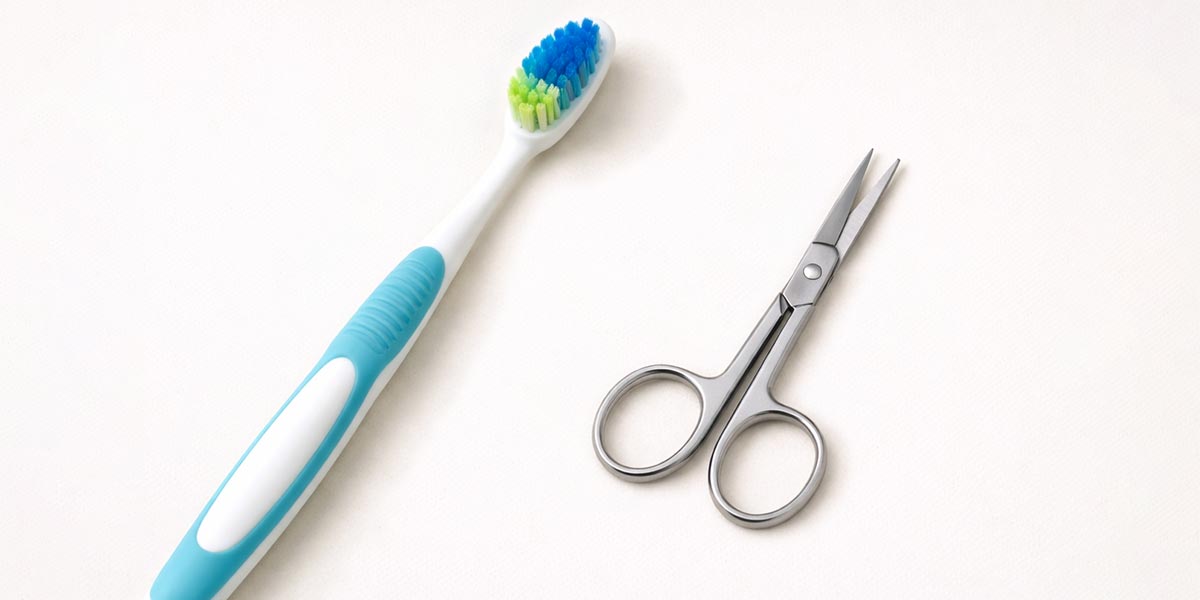
When most people think about DNA testing, the image that comes to mind is of a simple cheek swab, a soft cotton bud, rubbed gently on the inside of the cheek to collect a DNA sample.
It’s quick, painless, and highly effective. But what happens when collecting a cheek swab simply isn’t possible?
Whether you need to test a child discreetly, obtain a DNA sample from a loved one who has passed away, or find an alternative for someone who finds cheek swabs difficult, the answer lies in two scientifically validated methods: toothbrush DNA testing and nail DNA testing.
Both methods offer a practical, discreet and accurate way to collect a DNA sample when a standard cheek swab is not appropriate, without compromising on the quality or reliability of your results.
Here, we explore the benefits of toothbrush and nail DNA testing, who these tests are designed for, and the science behind why they work.
What are toothbrush and nail DNA tests?
A toothbrush DNA test and a nail DNA test are both types of viability study, a process in which our expert geneticists look to extract a usable DNA profile from an alternative sample source, rather than a standard cheek swab.
Here’s how the process works:
- Order your toothbrush or nail DNA test and select the DNA relationship test you need when placing your order e.g. paternity test, maternity test, sibling test.
- Your test kit is sent to you in discreet, plain packaging, containing everything you need to return your toothbrush or nail clippings to our laboratory, along with cheek swab samples from the other person or people taking part in the test.
- Once your samples arrive, our scientists will work to extract a DNA profile from the toothbrush or nail clippings.
- If a DNA profile can be retrieved from the toothbrush or nail clippings, we will proceed with your chosen DNA relationship test, comparing the DNA from the toothbrush or nail clippings with the cheek swab samples provided by the other participants.
- If a DNA profile cannot be retrieved, we will contact you and refund the cost of the DNA relationship test. Please note that a refund will not be possible for the laboratory work already undertaken during the viability study on the toothbrush or nail clippings.
It’s important to note that these tests are for peace of mind only and cannot be used in legal proceedings.
If you require a DNA test for court or other official purposes, you will need to instruct us for a legal DNA test.
Why these tests are useful: the key benefits
For many families, toothbrush and nail DNA tests can provide answers in circumstances where a cheek swab sample collection may not be possible or appropriate.
Key benefits of these tests include:
Discretion and sensitivity
DNA testing can be an emotionally complex process, particularly when children are involved.
Toothbrush and nail DNA testing allow a sample to be collected without the need to directly involve the person being tested.
This can be especially useful when performing a DNA test on an older child (e.g. paternity test), where collecting a cheek swab could lead to awkward questions.
Accessibility
For people who might find cheek swabs uncomfortable or distressing, including people with sensory sensitivities or developmental challenges, collecting nail clippings or a used toothbrush could be a more accessible and stress-free alternative.
Testing when a cheek swab is not possible
In some circumstances, collecting a cheek swab is simply not an option.
For example, where a person has recently passed away, a used toothbrush or nail clippings may be the only viable source of DNA available for that person.
If a usable DNA profile can be extracted from the toothbrush or nail clippings, a relationship test can then be performed by comparing the DNA profile of the deceased person with cheek swab samples from a living relative, helping to provide clarity and closure at an already challenging time.
Where testing involves a deceased person, consent must be provided by the next of kin before any samples can be submitted for analysis.
The same rigorous science, regardless of sample type
At AlphaBiolabs, all DNA testing is performed at our ISO 17025-accredited laboratory by expert geneticists, using validated DNA analysis techniques.
This means that the results of a toothbrush DNA test or a nail DNA test are just as accurate and reliable as those obtained from a standard cheek swab DNA test.
Why toothbrushes and nail clippings are effective sources of DNA
While cheek swabs remain the gold standard for DNA sample collection, both toothbrushes and nail clippings are scientifically proven to be reliable alternative sources of DNA.
Toothbrushes
Every time a toothbrush is used, it picks up traces of saliva and cheek (buccal) cells from inside the mouth.
Over time, these materials accumulate in the bristles of the toothbrush, providing a potential source of DNA for laboratory analysis.
The more often a toothbrush has been used, the greater the likelihood that there is enough genetic material present for a viable DNA profile to be retrieved.
This is why any toothbrush submitted for testing must have been used regularly for at least one week before being sent to our laboratory for analysis.
Nail clippings
Fingernails and toenails are composed primarily of keratin, a tough, fibrous protein that forms a protective structure around the nail bed.
Crucially, cells from the nail bed and the surrounding skin can remain present within nail clippings, providing a source of DNA for laboratory analysis.
How DNA is analysed
Once a DNA profile has been retrieved from the toothbrush or nail clippings, it is analysed using the same techniques applied to all AlphaBiolabs DNA relationship tests.
Our laboratory examines up to 45 DNA markers, twice as many as our competitors.
These markers, known as Short Tandem Repeats (STRs), are specific locations on a chromosome where sequences of DNA repeat in patterns that are highly variable between individuals.
By comparing these STR markers across the samples provided, our expert geneticists can determine whether the test participants are biologically related.
Learn more: The types of DNA testing
Important things to know before testing
Consent
Whatever the circumstances, consent is required from or on behalf of every person taking part in a DNA test.
- Children under 16: an adult with guardianship must provide consent on the child’s behalf
- Anyone aged 16 or over: must provide their own consent for their DNA to be used in testing
- Deceased individuals: consent must be provided by the next of kin or a person with a qualifying relationship to the deceased (e.g. spouse, partner, child)
Sample preparation
Taking care when preparing and submitting your samples will help ensure our laboratory has the best possible material to work with.
For toothbrush samples:
- The toothbrush must have been used regularly for at least one week before returning to our laboratory. The more it has been used, the greater the likelihood of obtaining a viable DNA profile.
- Submit the toothbrush dry and uncleaned. Do not rinse or clean it before sending.
- Place the toothbrush directly into the sample envelope provided in your test kit. Do not place it in a plastic bag or any other packaging, as this can reduce the likelihood of obtaining a usable DNA profile.
- Regular and electric toothbrushes are both accepted. If submitting an electric toothbrush, please send the brush head only, not the whole toothbrush
- Provide as many nail clippings as possible. Both fingernail and toenail clippings can be submitted together in the same sample envelope.
- All nail polish and artificial nail applications, including acrylics and gels, must be completely removed before clippings are taken, otherwise the sample will be rejected.
- Where nail clippings are being collected from a deceased person, these need to be collected by a coroner or funeral director.
Peace of mind vs legal DNA testing
Both our toothbrush DNA test and nail DNA test are for peace of mind only. This means the results can provide answers to questions you might have, but they cannot be used in court or for other official matters.
If you require a DNA test for legal proceedings or official matters – for example, in connection with a child custody case or immigration application – you will need to instruct us for a legal DNA test.
For a court-approved DNA test, the DNA samples must be collected by a professional sample collector under strict chain of custody conditions.
Learn more: Peace of mind vs legal DNA tests
Why choose AlphaBiolabs for DNA testing?
AlphaBiolabs is Ireland’s No.1 DNA testing laboratory, with over 20 years of experience providing accurate, confidential and compassionate DNA testing services to families across the country.
Both our Toothbrush DNA test and Nail DNA test are priced at €79 plus the cost of your chosen DNA relationship test.
Your password-protected results will be sent via email in just 4 business days after we receive your samples at our laboratory.
Here are just a few more reasons why families across Ireland trust AlphaBiolabs for toothbrush and nail DNA testing:
- €79 per sample, plus the cost of your chosen DNA relationship test – with results in just 4 business days
- Up to 45 DNA markers analysed – double the industry standard
- ISO 17025-accredited, ensuring our processes meet the highest international standards for accuracy and reliability
- Rated 5 stars on DNA Testing Choice, based on reviews from real customers
- We guarantee 100% confidentiality throughout the testing process, from discreet kit delivery through to secure, password-protected results
- Our friendly and knowledgeable Customer Services team is on hand to guide you through the process with professionalism and sensitivity
It’s easy to order your Toothbrush DNA test or Nail DNA test online now.
Need guidance on which test is best for you? Contact our Customer Services team on 01 402 9466 or email info@alphabiolabs.ie.
You can also learn more about DNA testing by visiting our Learning Centre.

Accredited DNA testing you can trust
Explore our complete range of accredited DNA testing services, trusted by families across Ireland.


