 01 402 9466
 info@alphabiolabs.ie
 0 Items

When Kyle Bylin received an at-home DNA test as a Christmas present, he had no idea it would uncover a secret nearly four decades old.
That he and another man, Jeremy Morrison, had been switched as newborns at the same hospital in 1988.
The story, which has since made international headlines, is a powerful reminder of just how much clarity a simple biological relationship DNA test can bring, even to questions that have gone unanswered for a lifetime.
While cases like this are extremely rare, they highlight the profound role that DNA testing can play in helping families uncover the truth about their biological relationships, whenever, and however, that need arises.
What happened in this case
According to a complaint filed against Unity Medical Center in Grafton, North Dakota (US), Jeremy Morrison and Kyle Bylin were the only two babies born at the hospital just hours apart on 28 January 1988.
The lawsuit alleges that, without either family’s knowledge, the newborns were switched before they left the hospital, with each boy going home with the other’s biological parents.
The mix-up remained undiscovered for nearly 36 years and only came to light after Bylin took an at-home DNA test, which connected him with a biological aunt through a genealogy platform. That connection prompted her nephew, Jeremy Morrison, to take a DNA test of his own.
The results confirmed what neither family could have imagined – the two men had been raised by each other’s biological relatives.
Since learning the truth, both men have connected with their biological parents, describing the reunions as “welcoming but awkward” as everyone adjusts to an entirely new understanding of their family history.
Related: DNA test uncovers shocking truth after 57 years
How often does this happen?
Stories like Kyle and Jeremy’s can understandably raise questions about how often mix-ups like this actually happen.
Reassuringly, long-term switches – where a baby is sent home with the wrong family and the mistake goes unnoticed for years – are considered a rare, isolated failure rather than a common occurrence. Additionally, modern hospitals have multiple safeguards in place to prevent it from happening.
In Ireland, maternity hospitals utilise a strict, multi-layered protocol established by the Health Service Executive (HSE), which includes:
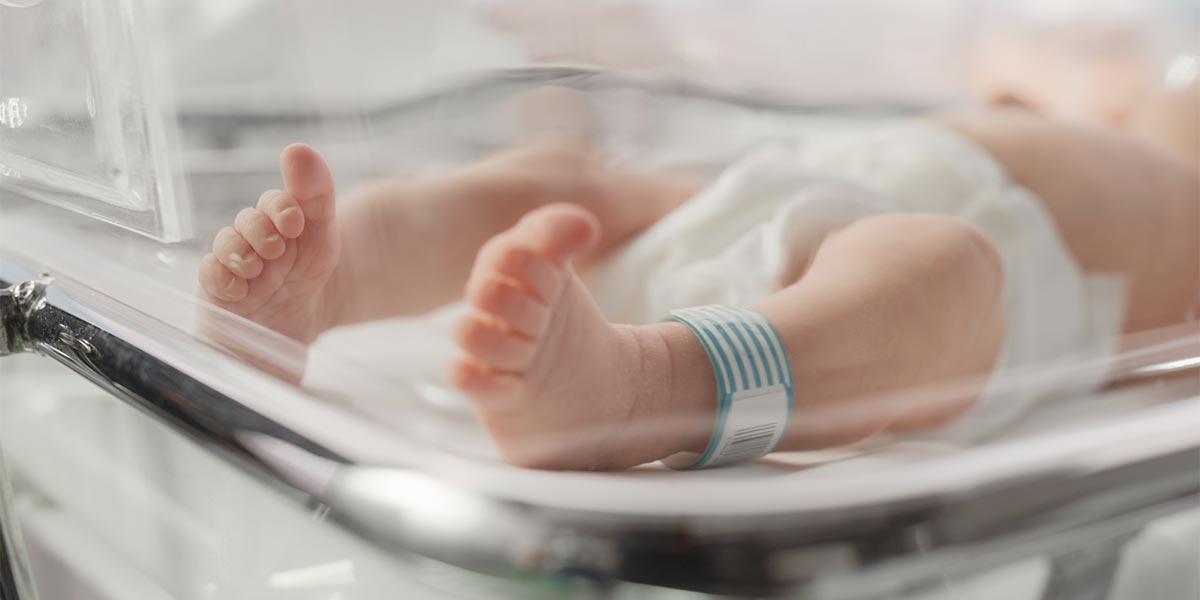
- Two ID bands printed for the baby, with one usually placed on the wrist and one on the opposite ankle, showing the mother’s full name, the baby’s sex, time and date of birth, and unique identification numbers. The mother is fitted with a wristband with matching details
- Major Irish maternity units, like that at The Coombe Hospital in Dublin, also attach an electronic security tag to the baby’s ankle. If a baby is brought near an exit door or lift without being formally discharged, the tag triggers an alarm, and the hospital doors slam shut and lock
- Irish hospitals enforce a strict ‘rooming-in’ policy, where the baby always remains by the mother’s bedside
- Whenever a baby must leave the mother’s side for a procedure or health check, two healthcare professionals must cross-verify the baby’s identity. When the baby is returned, staff are required to check that the unique numbers on the mother’s wristband match with the baby’s bands
These measures mean that cases like this remain the exception rather than the rule.
However, for the small number of families facing this kind of uncertainty, whether from a hospital mix-up or another unexpected discovery, DNA testing offers a fast, accurate and affordable way to find answers.
How DNA testing uncovers the truth
Kyle’s story began with an at-home DNA test taken out of curiosity; the kind of test that’s become a popular Christmas gift in recent years.
Many of these tests work by comparing a person’s DNA against large databases to estimate genetic origins and, in some cases, connect users with potential relatives who have also taken the test.
It was this relative-matching feature that first flagged something unexpected for Kyle, connecting him with a woman who turned out to be his biological aunt. That single match was enough to set off a chain of events that uncovered a switch nobody had suspected for 36 years.
Once a potential mix-up like this is unearthed, the next step is usually a DNA test to confirm a biological relationship between the participants.
Unlike an ancestry test, which offers insight into a person’s genetic origins, a DNA relationship test analyses specific genetic markers shared between family members to answer a precise question, such as whether two people are biologically related as parent and child, or as siblings.
With a simple, non-invasive cheek swab, it’s possible to get a scientifically robust answer to questions that might otherwise go unanswered.
When might someone consider a DNA test?
Potential hospital mix-ups are far from the only reason someone might seek clarity about a biological relationship.
Most people who take a DNA test to confirm a relationship do so for more everyday reasons, including:
- Unexplained family resemblance concerns – Sometimes a passing comment, a lack of physical similarity, or a gut feeling is enough to raise a question that only DNA can answer with certainty.
- Simple peace of mind – Not every DNA test is prompted by doubt. Many people simply want the certainty and reassurance that comes with confirming a biological relationship.
- Legal and official purposes – Many people require court-approved DNA testing for legal or official matters, such as changing the father’s name on a birth certificate, to formalise custody, access or maintenance agreements, to support inheritance disputes/claims, or as evidence for citizenship or naturalisation applications.
- Reconnecting after separation or adoption – DNA testing can offer a way to confirm biological ties when family members are reunited after years, or even decades, apart.
- Health and medical reasons – Knowing your true biological relationship to a family member (e.g. parent or sibling) can be important for assessing inherited health risks, informing family medical history, or exploring options such as organ or tissue matching.
Whatever the reason, having access to accurate, science-backed answers can make an enormous difference for everyone involved.
Learn more: How to choose the right DNA test – a comprehensive guide
Where can I get a DNA test?
Stories like Kyle and Jeremy’s are a powerful reminder of just how much clarity a DNA test can bring, even to questions that have gone unanswered for decades.
At AlphaBiolabs, we understand just how sensitive these situations can be. With over 20 years’ experience supporting families with DNA testing, all analysis performed at our ISO 17025-accredited laboratory by expert geneticists, and results delivered quickly and discreetly, you can trust that your test is in safe hands.
We offer an extensive range of high-quality, affordable peace of mind home DNA tests to help you find answers, including paternity, maternity, non-invasive prenatal paternity, baby gender, sibling, grandparent, aunt, uncle, Y chromosome, twin, toothbrush, and nail clipping DNA tests.
All our DNA tests are also available as court-approved tests, for legal or official matters.
For a legal DNA test, the samples must be collected by an AlphaBiolabs professional sample collector under strict chain of custody conditions. Our legal DNA test results are accepted by family law courts, the Irish Immigration Service, and other official bodies.
Instruct us for a legal DNA test
All testing is carried out in full compliance with EU GDPR, and we’ll never share your data with third parties or DNA matching services
Need more information? Call our friendly, knowledgeable Customer Services team on 01 402 9466 or email info@alphabiolabs.ie, for guidance on choosing the best test for your needs.

The best DNA testing available
Explore our complete range of accredited DNA testing services.


