 01 402 9466
 info@alphabiolabs.ie
 0 Items

When most people think about DNA relationship testing, paternity testing is usually the first thing that comes to mind.
But what happens when the person you need to test is unavailable, or when the question isn’t about a parent and child at all, but other biological relationships with extended family?
This is where complex DNA relationship testing comes in.
These tests go beyond parentage DNA testing (e.g. paternity or maternity tests) to explore a broader range of biological relationships, from grandparents and siblings to aunts, uncles, and the paternal line.
They use the same fundamental principles of DNA science but are designed for situations where direct parent-child testing isn’t possible, or where a different biological question needs answering.
Whether you’re seeking personal reassurance, clarity about your family history, or evidence to support an official matter, understanding the different DNA tests available – and which is right for your circumstances – is the essential first step.
What is complex DNA relationship testing?
DNA relationship testing works by analysing specific regions of a person’s DNA, known as genetic markers or loci.
Because every person inherits half of their genetic material from each biological parent, related individuals share a predictable number of these markers. The more closely related two people are, the more markers they are likely to have in common.
For complex relationship testing, rather than comparing a child’s DNA directly with that of a potential mother or father, these tests compare DNA between other biological relatives, such as a grandparent and grandchild, two potential siblings, or an aunt or uncle and a child.
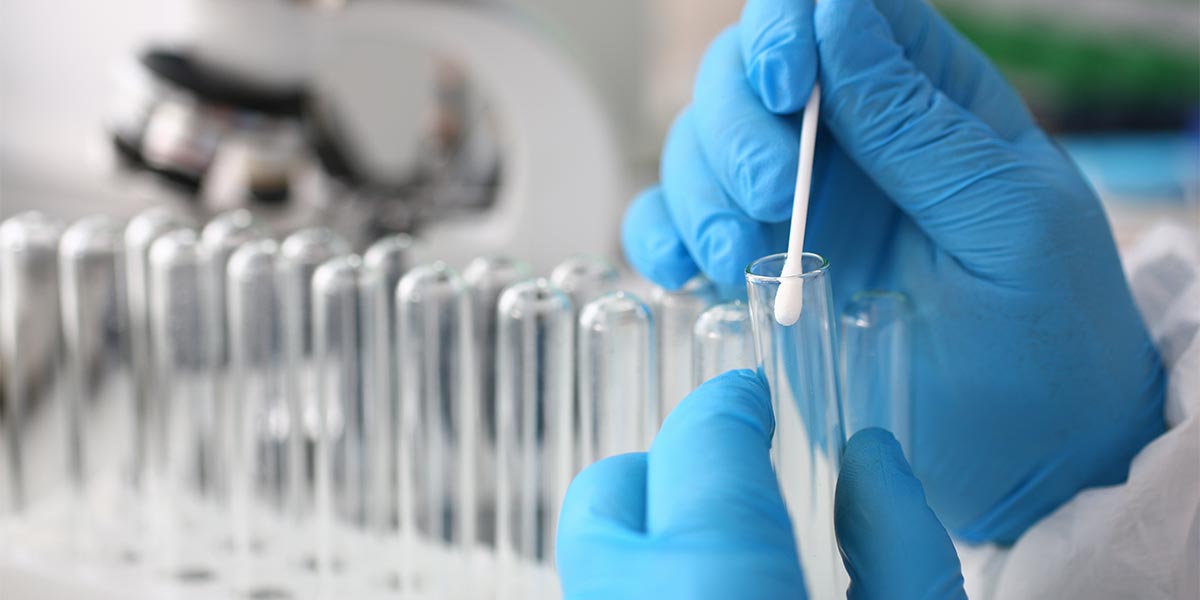
At AlphaBiolabs, all our DNA relationship testing is carried out by expert in-house geneticists at our ISO 17025-accredited laboratory, using cheek (buccal) swabs to collect DNA samples from each person being tested.
These samples are then analysed and compared to calculate the likelihood of a biological relationship existing between the tested individuals.
Learn more: Types of DNA testing
Who might need a complex DNA relationship test?
There are many reasons why someone might need to test a biological relationship that goes beyond a straightforward paternity or maternity test.
Some of the most common scenarios include:
- A parent is unavailable for testing – if the potential mother or father is unwilling, unable, or unavailable to provide a DNA sample, testing an extended family member can still provide meaningful answers. This includes situations where a biological parent has passed away.
- Questions about sibling relationships – where two or more people want to find out whether they share one or both biological parents (i.e. whether they are full or half siblings).
- Confirming a biological connection to extended family – some individuals seek testing to confirm a relationship with a grandparent, aunt, uncle, or other relative, whether for personal peace of mind or to support a wider family matter.
- Inheritance and estate disputes – where a biological relationship to a deceased person needs to be established to support a claim against their estate.
- Immigration applications – where an applicant has volunteered DNA evidence to support citizenship or naturalisation applications and direct parent-child testing is not possible or sufficient.
- Official and legal matters – complex relationship DNA tests can also be used to support family court proceedings, child maintenance applications, or other official matters where evidence of a biological relationship is required.
No matter the circumstances, it’s worth noting that consent must be provided by any person aged 16 or over whose DNA sample is being submitted for testing.
For a child under the age of 16, consent must be given on their behalf by an adult with guardianship.
Where a test needs to be performed between a deceased person and a living relative, consent must be obtained from the next of kin to collect the deceased person’s DNA for testing.
The types of complex DNA relationship test
There are several types of complex relationship DNA test available, depending on your personal circumstances.
Grandparent DNA test
A grandparent DNA test is used to verify a biological relationship between a grandparent and a grandchild.
Because every person inherits half of their DNA from each biological parent, a grandchild will share a proportion of their DNA with each of their grandparents. This makes grandparent testing a useful alternative when a biological parent is unavailable for a paternity or maternity test.
Sibling DNA test
A sibling DNA test establishes whether two or more individuals share the same biological mother, father, or both. Full siblings typically share more DNA than half siblings, while half siblings will generally share more DNA than two unrelated individuals.
This type of test is particularly useful where family circumstances mean there is genuine uncertainty about whether individuals are full or half siblings, or where there is no shared parent available to take part in testing.
Avuncular (aunt/uncle) DNA test
An avuncular test, more commonly known as an aunt DNA test or uncle DNA test, is used when the potential parent of a child is unable to provide a DNA sample, but their full biological sibling is available to be tested instead.
Because a biological aunt or uncle shares a significant proportion of their DNA with their sibling, they will also share DNA markers with that sibling’s child (their biological niece or nephew).
For a conclusive result, the aunt or uncle being tested must be a full biological sibling of the potential parent.
Y chromosome DNA test
A Y chromosome DNA test is used to determine whether two or more males are biologically related through the paternal line.
It works because all male children inherit their Y chromosome directly from their father, who inherited it from his father, and so on. This means it is possible to analyse and compare the DNA samples of test participants to determine a biological relationship through the paternal family line.
If the males in question are related, their Y chromosome will be identical.
If the profiles differ, the individuals are not related through the paternal line.
This test can be particularly useful in cases involving questions about paternity across generations, or where multiple potential male relatives need to be compared.
How results are calculated and what they mean
Once the DNA test has been performed, expert geneticists will make a biostatistical calculation to confirm the relationship between the tested individuals.
There are three possible outcomes for complex relationship DNA test results when calculating the likelihood ratio for relatedness:
- A score of 10+ is supportive, meaning that there is very strong evidence that a relationship does exist.
- A score of 0 to 0.1 would be classed as not supportive of a relationship.
- Any calculation falling within 0.1 to 9.9 would be considered inconclusive.
If the result is inconclusive, it means that it is not possible to determine if a biological relationship exists between tested individuals.
Complex relationship testing for legal and official purposes
Complex relationship DNA tests are not only used for personal peace of mind.
In many cases, they can play an important role in supporting legal and official matters, providing objective, scientific evidence of a biological relationship where it is needed most.
For a DNA test result to be accepted by a court, government body, or other official authority, the samples must be collected under strict chain of custody conditions.
This means that samples are collected by a trained professional, from the right individuals, with full documentation of the process at every stage. This procedure ensures the integrity of the samples and gives the results the legal standing required for use in official proceedings.
Common legal and official applications for complex relationship DNA testing include:
- Family court proceedings – where questions about biological parentage or family relationships need to be resolved as part of child custody, contact, or child maintenance cases.
- Inheritance and estate disputes – where a biological relationship to a deceased person must be established to support a legal claim.
- Immigration applications – where an applicant has volunteered DNA evidence to support a citizenship or naturalisation application, and direct parent-child testing is not possible.
- Child maintenance applications – where confirmation of a biological relationship is required to support a maintenance arrangement.
AlphaBiolabs is trusted by solicitors, social workers, local authorities and Family Law Courts across Ireland to deliver court-approved DNA testing, backed by strict chain of custody procedures at every stage.
Why choose AlphaBiolabs for complex relationship DNA testing?
AlphaBiolabs is the No. 1 DNA testing laboratory in Ireland, with over 20 years’ experience providing DNA testing services for families across the country.
All DNA testing is carried out by our expert geneticists at our ISO 17025-accredited laboratory, ensuring the highest standards of accuracy and reliability at every stage of the process.
Here are just a few more reasons to choose AlphaBiolabs for your complex relationship DNA test:
- Results in 2-3 business days as standard for most of our DNA relationship tests
- Full range of complex relationship tests available, including grandparent, sibling, avuncular, and Y chromosome testing
- All our DNA relationship tests can be made available for peace of mind or legal/official matters
- Rated 5 stars on DNA Testing Choice, based on reviews from real customers
- 100% accurate results, based on the samples received at our laboratory
- Complete confidentiality throughout the testing process
It’s easy to order your DNA test online.
If you’re unsure which test is right for your circumstances, contact our friendly, knowledgeable Customer Services team on 01 402 9466 or email info@alphabiolabs.ie.

Accredited DNA relationship testing
Explore our full range of relationship DNA tests, direct from our accredited laboratory.


